


Can you relate to this question posted on Reddit?
"Need a bit of help; Created an amazing product, posted some images on social media, all the feedback has been extremely positive... but ZERO sales. How do I change this?"
If you've been in the product or software world for a while, you've probably got a similar story. Inc. Magazine says 95% of the 30,000 products launched every year don't make it.
It's far too common.
Lots of time, money, and work go into making something awesome, an exciting release, and then disappointing adoption. Like a great movie playing in an empty theater.
"The problem with entrepreneurship is we are often working really hard producing high quality products that no-one wants."
Ouch.
Building things is inherently risky, because we don't fully know if customers will buy what we build or use what we build. Ultimately, we want to know if our idea is not just valid as an idea, but viable to our business.
That's where testing, experiments, and validation comes in. There are ways to test before you invest. There are proven models that can move you beyond the feeling of "I think the market wants this," and provide real evidence.
Here are some common product validation strategies you can use when looking to prove ideas, products, or features.
#1 — Have an Alignment Conversation
This may not seem like a real product test, but it's a great starting point. It's simply a conversation about how this idea would help us achieve current business goals. It's really a "connect the dots" conversation.
Several years ago, a friend told me a story about their early business goal of acquiring customers. Sure, product development and customer service are important, but starting out, my friend knew if they didn't have customers they didn't have a business. They put a jar of marbles on the desk and every time a customer would sign up, they would move a marble. It was a simple and visual representation of the most important goal.
When considering options, they could ask, "Will this help us move marbles?"
Obviously, you need to have clear, understandable, measurable, and documented business goals for this to be meaningful. But having an honest conversation about how an idea will move those goals forward is a great starting point.
#2 — Run Your Idea through The RICE Framework
RICE is a way to figure out what's most important to work on. It looks at four things: how many people it will affect (Reach), how big of a difference it will make (Impact), how sure we are about it (Confidence), and how much work it will take (Effort). It turns these ideas into a score that helps decide what to do first by showing which features or projects might be the most valuable.
There are a lot of ways you can assign values, but here's a simple way:
- Reach: Gauge the potential audience of your feature. Will it cater to a niche group or attract the masses? A 4 might mean this has the potential to reach a lot of users, while a 1 would be a smaller segment.
- Impact: Assess the potential magnitude of the feature. Will it significantly elevate the user experience or is it just a minor enhancement? A score of 3 might mean massive impact, 1 might mean medium impact, and .25 might indicate low impact for those users.
- Confidence: How certain are you about the successful execution and reception of the feature? 100% might mean high confidence, while 80% is medium and 50% is low.
- Effort: Evaluate the resources required. Is it feasible in terms of time, manpower, and budget? Again, you can use a four point scale.
The formula looks like this: Reach × Impact × Confidence ÷ Effort. Using your numbers, you do the math problem and you've got your RICE score. This becomes particularly useful when comparing two or more ideas.
#3 — Do an Assumption Mapping Exercise with the Team
This framework, popularized by David Bland, is another useful tool to honestly evaluate your assumptions. It is an interactive technique designed to identify assumptions as a team to help focus your experimentation. The goal of Assumptions Mapping is to get teams to talk to one another about the overall risk and then go do something about it.
You start by listing your assumptions in three categories:
- Desirable — Do they want this?
- Viable — Should we do this?
- Feasible — Can we do this?
Assumptions in the desirability category might be about target customer, value prop, reach, etc. Assumptions about viability might be about revenue generation, price justification, or profitability. And feasibility assumptions might be how we can handle technology, engage partners, or address risks.
Once the team lists all the assumptions, you map them on a 2×2 grid. The x-axis is for Evidence and the y-axis is for Importance. Items that fall in the top right (very important but not enough evidence) are great candidates for testing.
#4 — Look at the Data, Numbers, and Metrics
Even if you're not in an overly technical business, you likely have loads of data you can access to inform decisions. Diving into this data could help you shed some light on what's gaining traction and what people are interested in:
- Data from your email marketing campaigns
- Google Analytics and Heatmaps
- App metrics like time and frequency
- Social Media Engagement
- Product or Feature Usage
- Marketing funnel or campaign analytics
- Social listening and trend spotting
- Keyword and SEO research
When our team does a Product Viability assessment for a client, we dive into all the data we can get our hands on, because we know the numbers help tell the story.
#5 — Conduct User Interviews
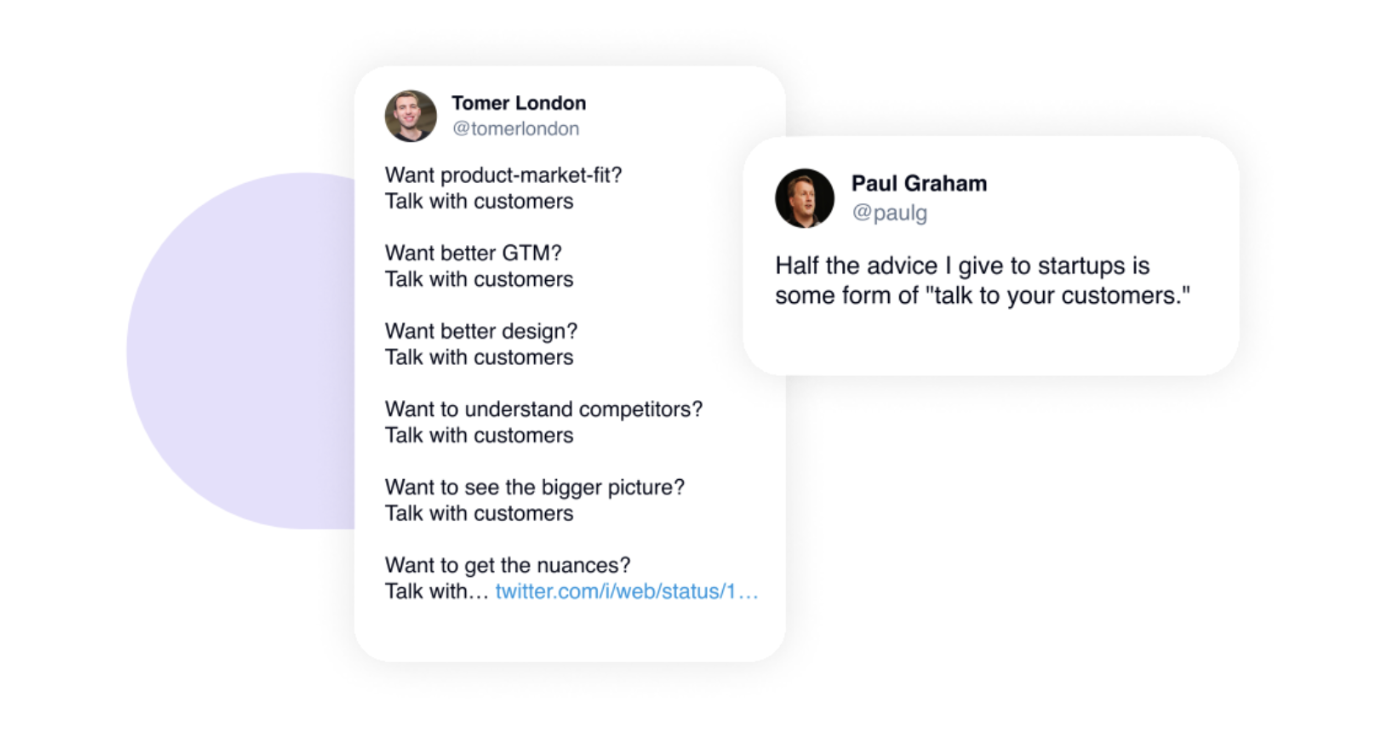
These are not just casual conversations but focused interviews that ask the right (and usually open-ended) questions. If you ask the right people the right questions, you can gather a lot of qualitative data to inform your product development, feature prioritization, and improvements.
Here are some tips on conducting great user interviews:
- Define your objective before you begin. Are you trying to understand pain points or identify features you should prioritize? You need a specific focus.
- Choose participants that represent your target users. If possible, talk to past, current, and potential users.
- Lean on open ended questions (How do you typically approach something?), behavioral questions (When was the last time you opened that app?), and comparative questions (How does our solution compare to the other things you've done?).
- Ask follow up questions and take good notes.
Don't underestimate the power of actually talking to customers or potential customers. In fact, it's nearly impossible to validate a product with an imaginary audience.
#6 — Survey Your Customers or Potential Customers
Surveys can be a good bridge between initial assumptions and the real word needs and preferences of a target audience. You can often identify user needs, assess demand, and prioritize features. There are several types of surveys:
- Idea Validation Surveys — These surveys assess market interest for a new product idea before development begins, ensuring there's a real need for the solution and reducing the risk of launching a product without market demand.
- Concept Testing — Conducted before full development, concept testing gathers feedback on a product prototype to refine features and usability based on potential user input, lowering the risk of market failure by aligning the product with user expectations.
- Customer Satisfaction Surveys — CSAT surveys measure customer satisfaction with a product or service, identifying strengths, areas for improvement, and gauging loyalty, which is key for guiding product enhancements and maintaining positive customer relations.
- Product Feedback Surveys — Focused on collecting user experience insights, product feedback surveys help in ongoing product improvement by prioritizing features and fixes that enhance usability and satisfaction among existing users.
Tools like Survey Monkey not only help you create, send, and analyze survey results, but they have audiences of people willing to provide feedback. That could be especially helpful when gathering baseline feedback on an idea.
#7 — Perform a Competitive Analysis
If you're serious about a market, you should deeply understand the existing solutions. You need to know their strengths and weaknesses and understand their strategy. It's important to look beyond who they are and what they are doing and really understand how they are helping their customers.
As a part of Hillcraft's Viability Assessment, we perform a competitive analysis. We look at:
- Market positioning
- Product offerings
- Pricing strategy
- Sales and marketing strategies
- Strengths and weaknesses
Having competitors is not a bad thing. Honestly, it's validating.
Sometimes, we talk to clients who say, "We don't really have any direct competitors." That's usually a red flag. It means their idea is too niche to have found a market.
#8 — Eat Your Own Dogfood
Dogfooding comes from the idea of "eating your own dog food" — a practice where a company uses its own products in its daily operations.
This is a type of internal product validation, allowing you the opportunity to test, use, and improve your product in your own real-world scenario before you release it to the external market. The idea is that if you expect others to buy and use a thing, you should be willing and confident to use it yourself.
Obviously, if you're making an app or a digital platform, asking your team to use the product before releasing it is a good idea. But you can also apply this principle in lots of places throughout your organization.
#9 — Rapidly Build a Minimum Viable Product (MVP)
Building products and platforms is expensive, so one of the smartest things you can do is start small with a minimum viable product. It's lower risk, and lower-cost, and it gives you a good way to test the market.
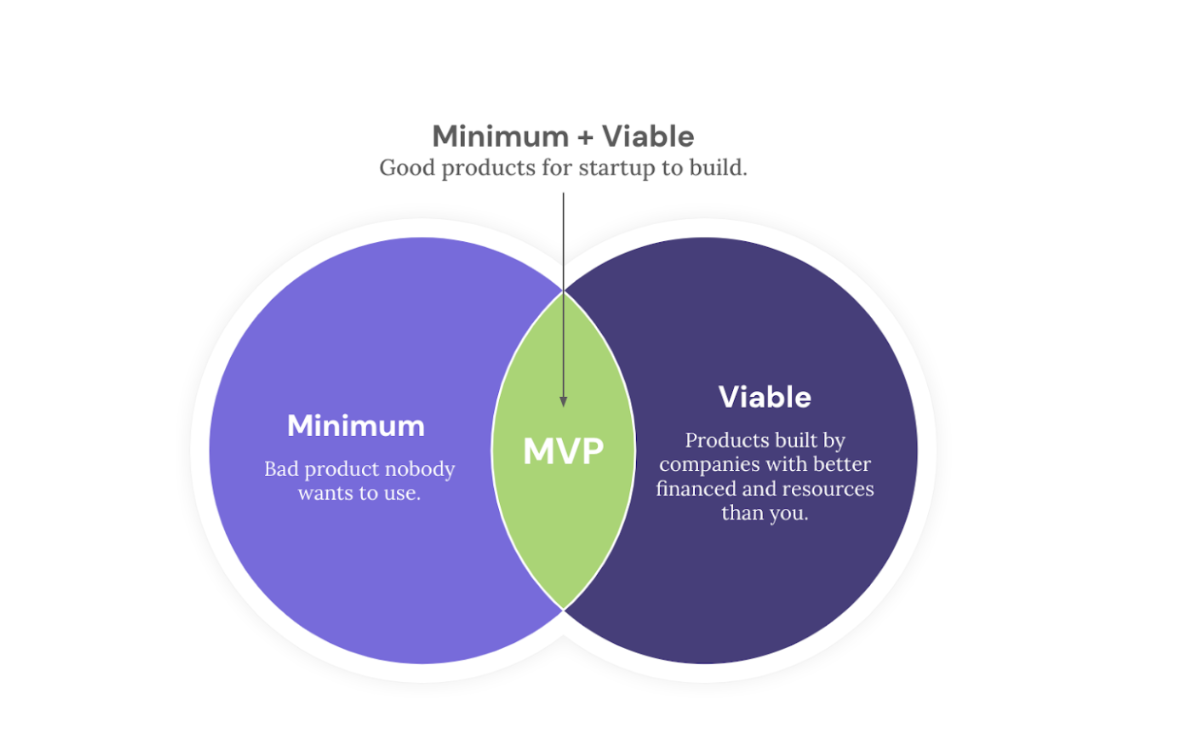
A good MVP lets you get something to market quickly. It is the most pared-down version of a product that can still be released. It has enough features to satisfy early customers and it's generally not built for scale. It's really a central key in the Lean Startup Methodology.
When we use the word minimum, we're not talking about a bad product that nobody wants to use. And when we talk about viable, we don't mean the perfect finished product. We're looking for something right in the middle.
Your MVP needs to have the basic feature set, not one good feature and a bunch of missing functionality.
It's the Airbnb founders using their own apartment and a minimalist website to find a few paying guests.
What can you build that has the essential feature to meet an early adopter's need? Once you prove viability and value, then you can move into the full product build with confidence.
#10 — Create Wireframes, Mockups, or Clickable Prototypes
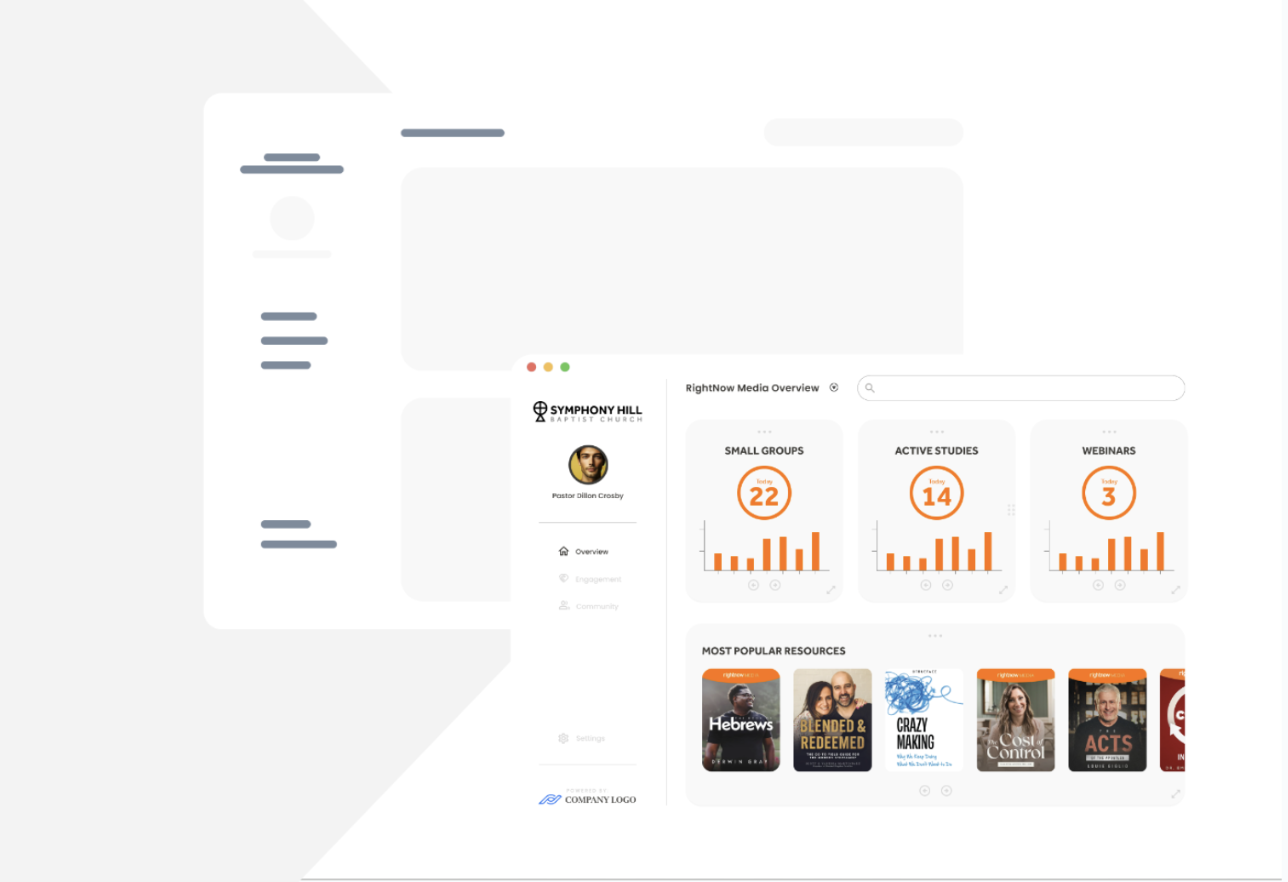
Wireframes are basic, low-fidelity visual representations of a product's layout, often devoid of color, graphics, or styling. They focus on structure, content, and functionality. Even at this basic level, you can often uncover usability issues and make early adjustments.
Mockups are static, high-fidelity visual representations that include design elements like colors, type, and images. They are usually a little more representative of the final product and help validate the visual appeal to the intended audience.
Prototypes are interactive, working models of a product that simulate user interactions and flow. They can be lo-fi or hi-fi. They really help validate functionality and provide real feedback on usability.
All of these options can help people understand features and how they will work, way before they are built.
#11 — Run a Smoke Test
The term "smoke test" comes from software development, where tests were launched to catch major failures early. But when thinking about product validation and testing, it's a useful way to show something that really doesn't exist yet to see if people will take action.
A smoke test allows you to run a product test without even having an actual product.
- You can make a landing page for a product that isn't built to see what people do.
- You can run an ad to a product that turns out to be "coming soon" to see if customers are really ready to buy.
- You can show product features that aren't fully built yet to measure interest and excitement.
Here's an example from Buffer, a social media scheduling app: They promoted a new feature and led people to click a button to see plans and pricing. That feature wasn't ready, but they were able to measure actual intent.
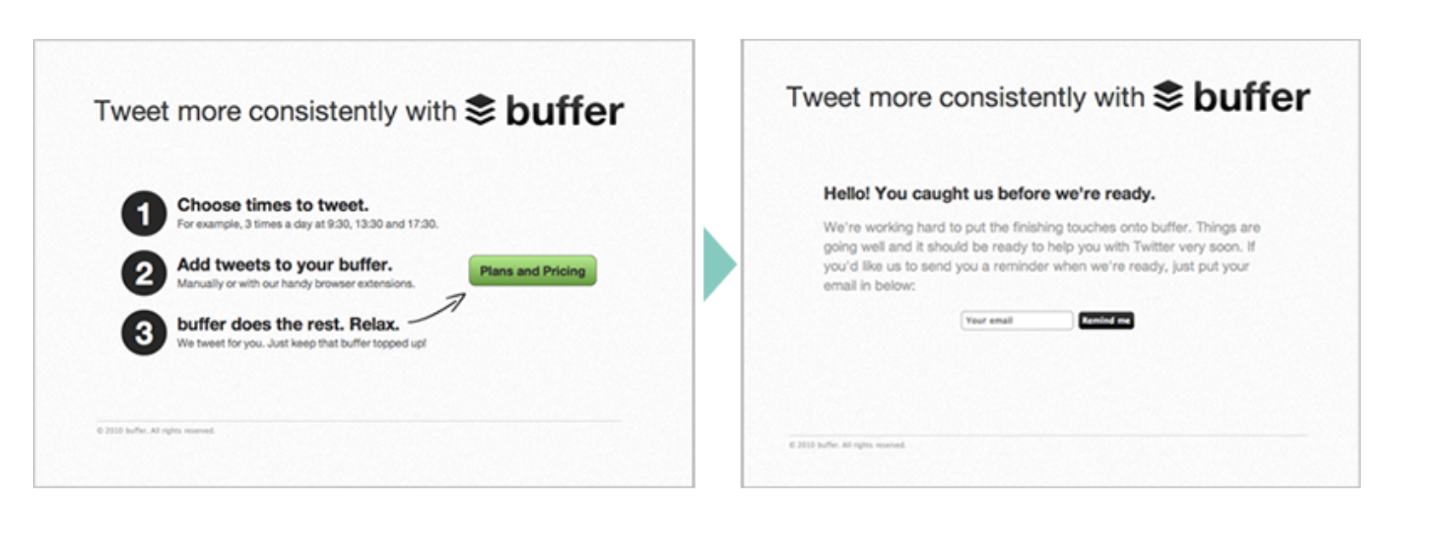
Coming soon pages, pre-orders and crowdfunding campaigns are types of smoke tests.
#12 — Let a Human Run a Concierge Test
If you're building a product that will solve a problem for a customer, you could solve that problem manually — validating the idea they want the problem solved and then building the automation later.
A Concierge Test is essentially a human activity performed for a customer that a software or tool will eventually accomplish.
When Groupon first launched, they sold discount codes to restaurants and websites. What you might not know is while the sale happened automatically, fulfillment was a manual process. Someone manually created codes and sent them to purchasers.
This obviously isn't a scalable solution, but the early goal was just to prove the model.
#13 — Release Early Adopter, Beta Tests or Preview Versions
Giving early access to an uncompleted tool in exchange for candid feedback is a way to get feedback and evaluate market potential.
Gmail famously used an invitation-only beta release way back in 2004. Spotify, Dropbox, and Slack also operated in a closed-preview phase before truly launching in the market.
Studying how people actually use the product combined with their focused and candid feedback should be a valuable validation tool.
When you utilize these types of releases, it's important to set expectations, be prepared for feedback, and realize that you can't immediately act on every point of feedback.
#14 — Run an A/B Test
Split testing is a common way to compare two options and see which performs better. To run a true test, you need to create two versions of the same thing then change a single variable. You can show both versions to see what someone prefers, or you can split traffic to one of the versions and measure results.
A/B testing can be used to evaluate marketing like emails, ads, landing pages, and headlines. But you can also use A/B testing to validate product ideas like user interface, onboarding, content format, checkout process and more.
Take a Next Step
At Hillcraft, we help clients discover and define their ideas and think strategically before building. One of the biggest ways we do this is a Validation Sprint.
Our team learns about your product, the market, the competitors, and the business then prepares a comprehensive report for you and your team. That report provides high-level and granular detail on all aspects of the product and business. We also review technology capabilities and needs.